

Request a Free
Estimate Today!
"*" indicates required fields

Stinging Insect Control in Washington, DC, Maryland & Northern Virginia
Stinging insects can turn patios, yards, and entryways into high-stress areas fast—especially when nests form near doors, decks, play areas, and rooflines. In the DMV, wasps, hornets, and yellow jackets become most active during warm months and often escalate in late summer as colonies grow and become more defensive. Pestechs provides stinging insect control designed to address active nests safely, reduce immediate risk, and help prevent repeat activity around your home or business.
Common Stinging Insect Problems in the DMV
Not all stinging insects behave the same. Correct identification matters because nesting sites, aggression levels, and treatment methods can differ.
Pests We Eliminate From Your Home
Protecting Your Home And Family Is
Our #1 Priority
Try Pestechs Today - We Guarantee 100% Satisfaction
Wasps (Including Paper Wasps)
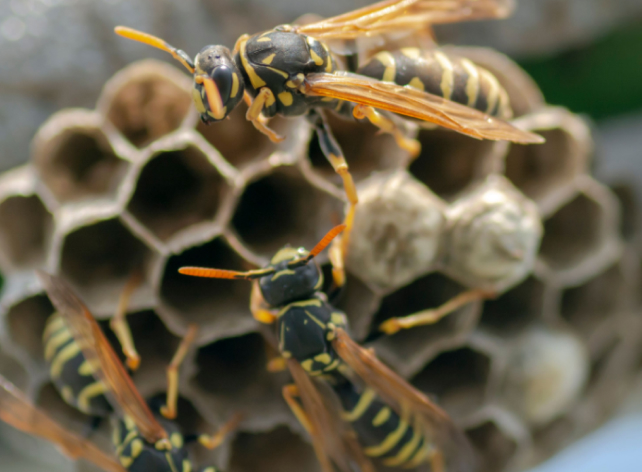
Paper wasps commonly build open, umbrella-shaped nests under eaves, porch ceilings, deck railings, shutters, and outdoor furniture. They can become aggressive when nests are disturbed, especially as the season progresses. If you’re seeing repeated wasp activity around rooflines or porches, there’s often a nest nearby.
Hornets
Hornets are known for larger nests and more defensive behavior around the nest area. Depending on the species, nests may be built in trees and shrubs or attached to structures. When hornets are present, DIY approaches can be risky due to the likelihood of repeated stings and defensive swarming.
Yellow Jackets
Yellow jackets are one of the most common “problem” stinging insects in the DMV. They’re often seen around trash cans, outdoor eating areas, and anywhere food odors are present. Many yellow jackets nest underground (or in wall voids), making them hard to locate and easy to accidentally disturb—especially during yard work. Late summer is when yellow jacket issues often peak.
Other Stinging Insect Concerns
Homeowners and property managers may also deal with other stinging insect activity around structures, landscapes, and outdoor gathering areas. If you’re unsure what you’re seeing, Pestechs can identify the pest and recommend the safest next step.
Why Stinging Insect Issues Get Worse Later in the Season
Most stinging insect colonies grow throughout spring and summer. As colonies become larger, insects become more protective of the nest, and sightings increase. That’s why early action matters—small nests can become major problems, and the risk of stings often rises as the season progresses.
How Pestechs Handles Stinging Insect Control
Step 1: Identify the Insect and Locate the Nest
We confirm what you’re dealing with and track activity to the nest location—on the structure, in landscaping, underground, or in wall voids.
Step 2: Targeted Nest Treatment
We apply targeted treatment designed to eliminate the nest safely and reduce aggressive activity. Treatment methods depend on the insect type and nest placement.
Step 3: Removal Guidance and Risk Reduction
In many situations, the key is to eliminate activity first, then address the area to reduce attraction and re-nesting. We’ll provide clear recommendations based on your property’s layout and seasonal pressure.
Step 4: Prevention Recommendations
We help you prevent future problems by addressing common attractants and nesting zones—such as sealing gaps, managing trash odors, and reducing harborage around eaves and outdoor structures.
What You Should Do If You See a Nest
- Keep a safe distance and avoid vibrations near the nest (mowers, weed trimmers, ladders)
- Keep children and pets away from the area
- Avoid spraying store-bought aerosols if you can’t confirm the species and nest location
- Schedule professional service—especially for nests near entryways, play areas, or inside structures
Stinging Insect Control for Homes & Businesses Across the DMV
Pestechs provides stinging insect control throughout Washington, DC, Maryland, and Northern Virginia. Whether you’re dealing with wasps on a porch, hornets near rooflines, or yellow jackets nesting in the yard, we’ll build a plan that prioritizes safety, fast relief, and long-term prevention.
What Makes Us the #1 Choice
for Pest Control?
Family-Friendly Service
EPA-approved products and trained technicians to protect people, pets, and the environment.
Locally Owned Business
A family-owned company focused on trust, reliability, and personal service.
Guaranteed Protection
If pests come back between visits,
so do we.
What Your Neighbors Are Saying About
Pestechs Pest Control Services
The Cities We Serve in Maryland,
Virginia & Washington DC
Washington, D.C.
Maryland
Northern Virginia
Stinging Insect
Control FAQs
Stinging insects are a common warm-season problem in the DMV, especially around rooflines, decks, garages, outdoor eating areas, and landscaped yards. Below are answers to the most common questions we hear from customers in Washington, DC, Maryland, and Northern Virginia.
Are wasps, hornets, and yellow jackets the same thing?
They’re related, but not the same. They can differ in nesting habits, aggression, and where they’re most commonly found. Correct identification helps ensure the safest and most effective treatment.
Why are yellow jackets so aggressive?
Yellow jackets tend to be highly defensive near their nests, and colonies grow larger later in the season. They’re also attracted to food and sugary odors, which is why they’re common around trash cans and outdoor meals.
Where do yellow jackets usually nest?
Many yellow jackets nest underground, but they can also nest in wall voids, attics, and other structural cavities. Underground nests are often disturbed accidentally during yard work.
What does a paper wasp nest look like?
Paper wasps often build open, umbrella-shaped nests under eaves, porch ceilings, deck railings, and other protected exterior areas.
Should I try to remove a wasp or hornet nest myself?
DIY removal can be risky, especially if the nest is large, located high on a structure, or belongs to a more defensive species. Professional treatment is strongly recommended when nests are near entryways, play areas, or inside wall voids.
What should I do if stinging insects are entering through a wall or vent?
That can indicate a nest in a wall void or attic area. Avoid blocking the entry point immediately, as insects may move deeper into the structure. Professional inspection and targeted treatment is the safest next step.
How fast can you eliminate a stinging insect nest?
In many cases, relief is fast—often the same day of service or shortly after—depending on nest type and location. Some situations may require follow-up if activity is coming from a hidden void.
Will the insects come back after treatment?
Once a nest is eliminated, that colony won’t return—but new nests can form in favorable areas later. Prevention focuses on reducing nesting sites and attractants to limit repeat activity.
How can I reduce stinging insects around my home?
Keep outdoor trash sealed, clean up food and drink spills, avoid leaving sugary drinks uncovered outside, seal gaps around siding and soffits, and monitor common nesting areas like eaves and porch ceilings early in the season.
Do you provide stinging insect control for businesses and commercial properties?
Yes. Stinging insects are a common issue for restaurants, warehouses, office buildings, and multi-family properties. Pestechs can address active nests and help reduce ongoing pressure around entrances and outdoor common areas.